Moments in the life of a Pastor

Walking with God


Leave a comment

13 Trusting in times of trouble – Part 1

Psalm 46:1-11

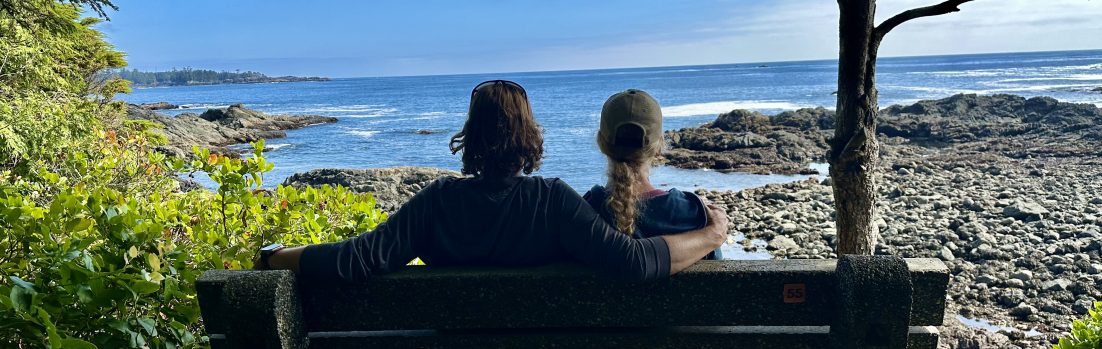
“1 God is our refuge and strength, always ready to help in times of trouble. 2 So we will not fear when earthquakes come and the mountains crumble into the sea. 3 Let the oceans roar and foam. Let the mountains tremble as the waters surge! Interlude. 4 A river brings joy to the city of our God, the sacred home of the Most High. 5 God dwells in that city; it cannot be destroyed. From the very break of day, God will protect it. 6 The nations are in chaos, and their kingdoms crumble! God’s voice thunders, and the earth melts! 7 The Lord of Heaven’s Armies is here among us; the God of Israel is our fortress. Interlude. 8 Come, see the glorious works of the Lord: See how he brings destruction upon the world. 9 He causes wars to end throughout the earth. He breaks the bow and snaps the spear; he burns the shields with fire. 10 “Be still, and know that I am God! I will be honored by every nation. I will be honored throughout the world.” 11 The Lord of Heaven’s Armies is here among us; the God of Israel is our fortress. Interlude”

Psalm 46 is a song that was written in the context of stress, problems, and great uncertainty. The writer’s world wasn’t just crumbling; it was caving in all around him. Even though this was originally written with the nation of Israel in mind, it is still applicable to us today. A nation is only as strong as the foundation on which its faith rests. Today we want to trust in government more than in God. But the source of our strength cannot be in our government, our economy, or even our military mighty. Today much of our turmoil comes because we are trying to trust in the temporary. We need to turn from trusting in our government and our gold and turn back to God. In this psalm we see three interludes, some versions use the word Selah. It is believed to have been a musical rest, in which the singers stopped singing and only the instruments were heard. This may also signify a musical crescendo that is then followed by silent reflection, carrying the thought of a time of meditation. In this Psalm we are called to pause and meditate on the magnitude and magnificence of God. As we pause and reflect at these three musical rests we are reminded of three essential truths about God. It’s here that we discover a God who demonstrates His dependability through:

  • His Protection

No matter what we are going through we are reminded that God is our refuge and sure strength. Only He is our help in the harrowing times. When all other harbors fail He will not, because His firm foundation is not based on our feelings but His faithfulness.  God is our reliable refuge even when what we perceive as permanent crumbles. It’s in these times when our world comes crashing down and everything we thought we could rely on caves in around us that we really discover that only God can truly protect us. This word “refuge” literally means to flee and run to a shelter, God wants us to run to Him for protection. Who or what are you running to and relying on for protection? Not only are we to rely on Him as a refuge but second we need to seek His strength. We need to rest in His strength and not our striving. When we feel weak and defenseless we need to lean on the Lord. The Psalmist says that God is always ready to help, He is an ever-present help, meaning that God is quick to give assistance. Literally it means that God has so proved Himself to be a help in the past and we can trust Him in the present. Part of our pausing should involve a time of reflection where we remember the faithfulness of God in the past so that we will fully trust him in the present. Because of who He is we do not have to fear. The word for trouble here refers to times of tribulation and the Psalmist is saying that in these times of trouble we don’t have to live in fear because our God is a faithful refuge and a secure strength. The question is, are you going to run to Him or try and rely on self? Verse 2 tells us not to fear but this is only true if verse 1 is true. If God is your refuge and strength, you don’t have anything to worry about. The problem is that many of us are not making Him our foundation; we are trying our trust to other things. When it comes to our fears the writer paints a worst case scenario. It’s a calamity on a cosmic scale with earthquakes, erupting volcanoes and mountains falling into the sea. But notice that even though the “earth gives way,” our circumstances cave and change, we don’t have to be afraid. Mountains have always been seen as the most secure part of nature, they are considered the most fixed and firm things on earth. Yet we are reminded that even the foundations of the earth can erode. We are to look to the Creator, not the creation, to love the Giver, and not the gifts. When 911 occurred it hit the country hard because the World Trade Center was seen as a symbol of economic power and stability, and the Pentagon stood for security, protection, and military supremacy. The very things we looked to as symbols of strength crumbed. The truth is that our only source of security is in God. When the economy collapses, wars break out, natural disasters destroy our communities, governments collapse, or our health fails, God is the only place we will find security. We may want to believe that our world, with all its advancements in technology and science is safer today than it was thousands of years ago but the truth is it’s not. We still can’t control violent volcanoes, tornadoes or tsunamis. Verse three describes the roaring waters of the sea, which is a perfect picture of our lives when they’re out of control. Roaring here means a great commotion, which describes our fluctuating feelings as we drown in the raging waves of worry. Our only security comes from placing our lives into the hand of the One who holds eternity, who is in control of all things. When Martin Luther was surrounded by trouble he read Psalm 46 and then wrote the great hymn, “A Mighty Fortress Is Our God.” He saw the power of God as “a bulwark never failing.” No matter how fierce the storm the strength of God can sustain us. We see the collapse of our economy as a catastrophe, but sometimes it takes losing those things we rely on for safety in order to start seeking God. Our sense of helplessness should drive us to Him. As we come to the first interlude at the end of verse 3 take time to pause and ponder the power and protection of God. Who or what are you really trusting in? Are there any false safety nets that you are relying on that need to be stripped away so you can fall fully into the Fathers hands?


Leave a comment

11 Facing your Fears – Part 3

1 Samuel 17:34-47

34 But David persisted. “I have been taking care of my father’s sheep and goats,” he said. “When a lion or a bear comes to steal a lamb from the flock, 35 I go after it with a club and rescue the lamb from its mouth. If the animal turns on me, I catch it by the jaw and club it to death. 36 I have done this to both lions and bears, and I’ll do it to this pagan Philistine, too, for he has defied the armies of the living God! 37 The Lord who rescued me from the claws of the lion and the bear will rescue me from this Philistine!” Saul finally consented. “All right, go ahead,” he said. “And may the Lord be with you!” 38 Then Saul gave David his own armor—a bronze helmet and a coat of mail. 39 David put it on, strapped the sword over it, and took a step or two to see what it was like, for he had never worn such things before. “I can’t go in these,” he protested to Saul. “I’m not used to them.” So David took them off again. 40 He picked up five smooth stones from a stream and put them into his shepherd’s bag. Then, armed only with his shepherd’s staff and sling, he started across the valley to fight the Philistine. 41 Goliath walked out toward David with his shield bearer ahead of him, 42 sneering in contempt at this ruddy-faced boy. 43 “Am I a dog,” he roared at David, “that you come at me with a stick?” And he cursed David by the names of his gods. 44 “Come over here, and I’ll give your flesh to the birds and wild animals!” Goliath yelled. 45 David replied to the Philistine, “You come to me with sword, spear, and javelin, but I come to you in the name of the Lord of Heaven’s Armies—the God of the armies of Israel, whom you have defied. 46 Today the Lord will conquer you, and I will kill you and cut off your head. And then I will give the dead bodies of your men to the birds and wild animals, and the whole world will know that there is a God in Israel! 47 And everyone assembled here will know that the Lord rescues his people, but not with sword and spear. This is the Lord’s battle, and he will give you to us!”

Not only do we need to deal with the people pressure but we also need a:

  • Different perspective

Haddon Robinson, a pastor, professor, and theologian, once said: “In any situation, what you ARE determines what you see; what you SEE determines what you DO.” Just like the report that the ten spies brought back to Moses in Numbers 13:33: “We saw the giants there…We seemed like grasshoppers in our own eyes, and we looked the same to them.” While everyone else saw Goliath as too big to mess with David saw him as too big to miss. Do you have a poor perspective or a proper perspective? Do you see yourself as a victim or a victor? If you see yourself as a victim, you will react accordingly, but if you see yourself as a victor then that is how you will respond. Many of us lose the battle before it ever begins because we chose to focus on the giants and not on God. David focused on his provider and protector not on the problem. When you lose sight of God it’s not long before you give up. In 1952, a young woman named Florence Chadwick attempted to swim from Catalina Island to the California coast, a distance of 26 miles. As she began, she was flanked by small boats that watched for sharks and were prepared to help her if she got hurt or grew tired. After about 15 hours a thick fog set in. Florence began to doubt her ability, and she told her mother, who was in one of the boats, that she didn’t think she could make it. She swam for another hour before asking to be pulled out, unable to see the coastline due to the fog. As she sat in the boat, she found out she had stopped swimming just one mile away from her destination. Two months later, she tried again, the same thick fog set in, but she succeeded in reaching Catalina. She said that she kept a mental image of the shoreline in her mind while she swam. She would later swim the Catalina channel on two additional occasions. The fog caused her to give up because it poisoned her perspective. She gave up the fight because she lost sight of the finish. The second time she had success despite the fact that she faced the same foggy problem, because even though she lost sight of the shore physically she never lost perspective. Don’t let problems cloud your perspective and cause you to give up. While Goliath had an armor bearer David had the Almighty. Today if you are paralyzed by fear, or feeling hopeless about the future pray and ask God to free you from the fog. Don’t let the problems poison your perspective. Not only did David have a different perspective but he also:

  • Dared to Proclaim God’s name

As David came closer and Goliath realized that he was just a boy, just like everyone else he also despised and dismissed David, saying: “Am I a dog that you come at me with sticks?” Max Lucado captures the contrast between David and Goliath as he calls this “The toothpick versus the tornado.” Goliath doesn’t just insult David he curses him declaring that he will feed him to the birds and the beasts. David now does what no one else had thought to do he introduces God into the equation. David was the only one who was concerned about God’s name and His people’s reputation, everyone else cared only about self. He reminds the enemy of the Almighty. Saul’s solution was to try and get David to trust in his armor but David trusted in the Almighty. Today many of us are trying to put our trust in our man-made armor instead of the Almighty. We would rather rely on other people’s solutions than the Savior. Instead of trusting in God the father we want a formula on which to rely. Are you facing a giant right now, have you introduced God into the equation or are you relying on something else? Everyone, from family to foe, wanted to despise and dismiss David, but look at how he responded to being ridiculed: “You come against me with sword and spear and javelin, but I come against you in the name of the LORD Almighty, the God of the armies of Israel, whom you have defied.” David then describes in great detail what he will do to Goliath and declares in verse 47: “All those gathered here will know that it is not by sword or spear that the LORD saves; for the battle is the LORD’s, and he will give all of you into our hands.” David focused on God and what he could do not on what others said. The name of God that David used is Jehovah Sabaoth, the Commander of the Hosts of Heaven. Amos 4:13 describes the name of God in greater detail: “He who forms the mountains, creates the wind, and reveals his thoughts to man, he who turns dawn to darkness, and treads the high places of the earth–the LORD God Almighty (Jehovah Sabaoth) is his name.” David didn’t just face his giant he flattened the giant because he focused on the power of God not on the puny giant. What about you are you focused on the problem or His presence? When you focus on God’s power in puts your problems into perspective. Our God has unlimited power, unbridled might and untarnished glory, He is impossible to fully describe and incredible to imagine. In contrast to Goliath, God is the Creator of the world. If you want to minimize your Goliaths then start magnifying your God. David didn’t listen to Goliath’s words and worry he made Goliath aware of God. Many of us are living defeated lives because we are listening to the enemies lies and letting them define our lives. Don’t let the enemy have the last word, stop listening to Satan’s lies and start reminding him of what God has in store for him. David now describes in great detail what will happen to Goliath and who the battle really belonged to. David voiced the victory before the battle ever began because he knew who the battle belonged to. When God goes to war the battle is over before it ever begins, Goliath the giant was as good as dead. While no one else talks about God, David talks about no one but God. While everyone else focuses on fear David focuses on the Father. He sees what they don’t and refuses to look at what they do. It’s not that David doesn’t see the giant he just sees God more, look at the number of times David refers to the giant verses God. David talks about Goliath twice, but he talks about God nine times. Do your God thoughts out number your Goliath thoughts four-to-one? What if we were to focus on the Father four times more than we do fear?  How do you fillet fear, by remembering that it is God who fights for you. The only way to face your giants is through faith in God. Right now verbalize your confidence in Christ, call on His name and say His name out loud. It’s time to measure your giants against the greatness of God not yourself. You will never put your problems in their place if you keep give them power. David didn’t see the giant as an obstacle but as an opportunity to get to know God better. Do you want a different perspective, then dare to proclaim the name of God and get ready to discover just how great He is.